How Volatility Ratings Guide Free Spin Allocation in Cross-Platform Live Dealer Sessions
Frankie Butler · Oct 3, 2026
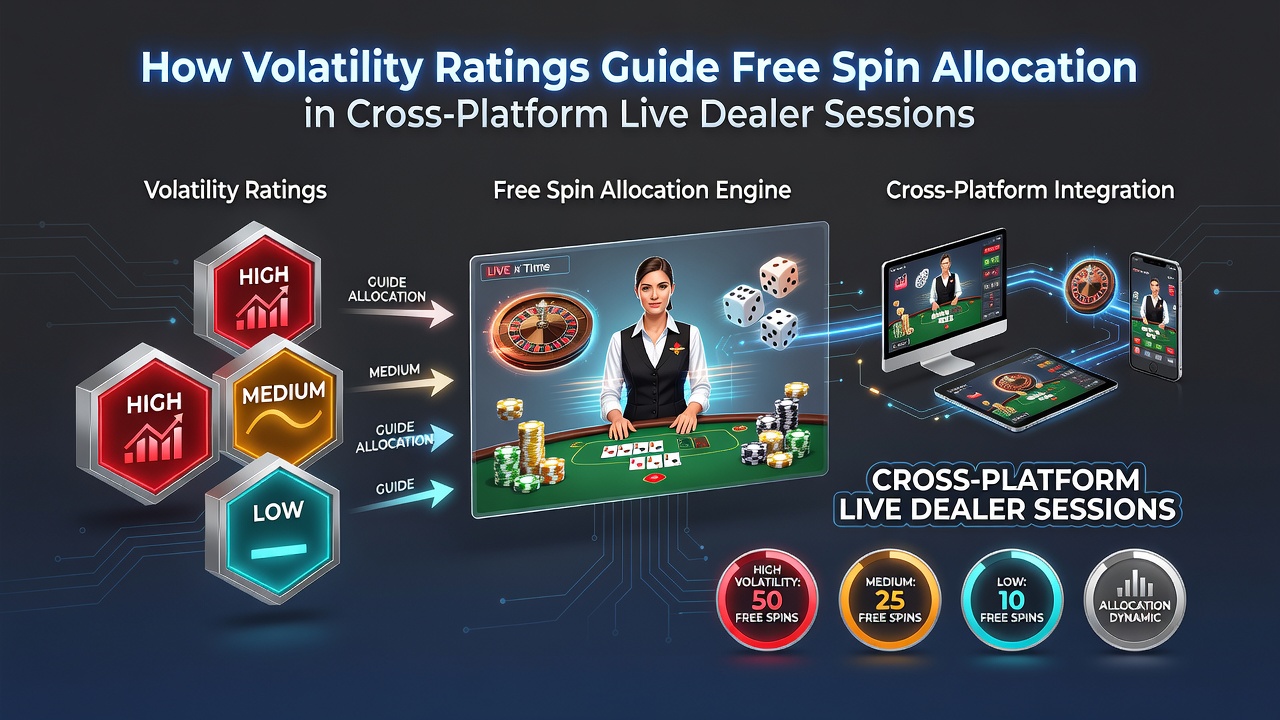
How Volatility Ratings Guide Free Spin Allocation in Cross-Platform Live Dealer Sessions
Operators in digital gaming environments rely on volatility ratings to shape how free spins reach players during live dealer sessions that operate across desktop, mobile, and tablet interfaces, and these ratings help determine prize frequency along with payout scale in games that blend table elements with slot mechanics. Data collected through October 2026 shows platforms adjusting allocations based on whether a title carries low, medium, or high volatility labels, which in turn influences session length and player retention metrics across different devices.
Core Mechanics of Volatility in Allocation Systems
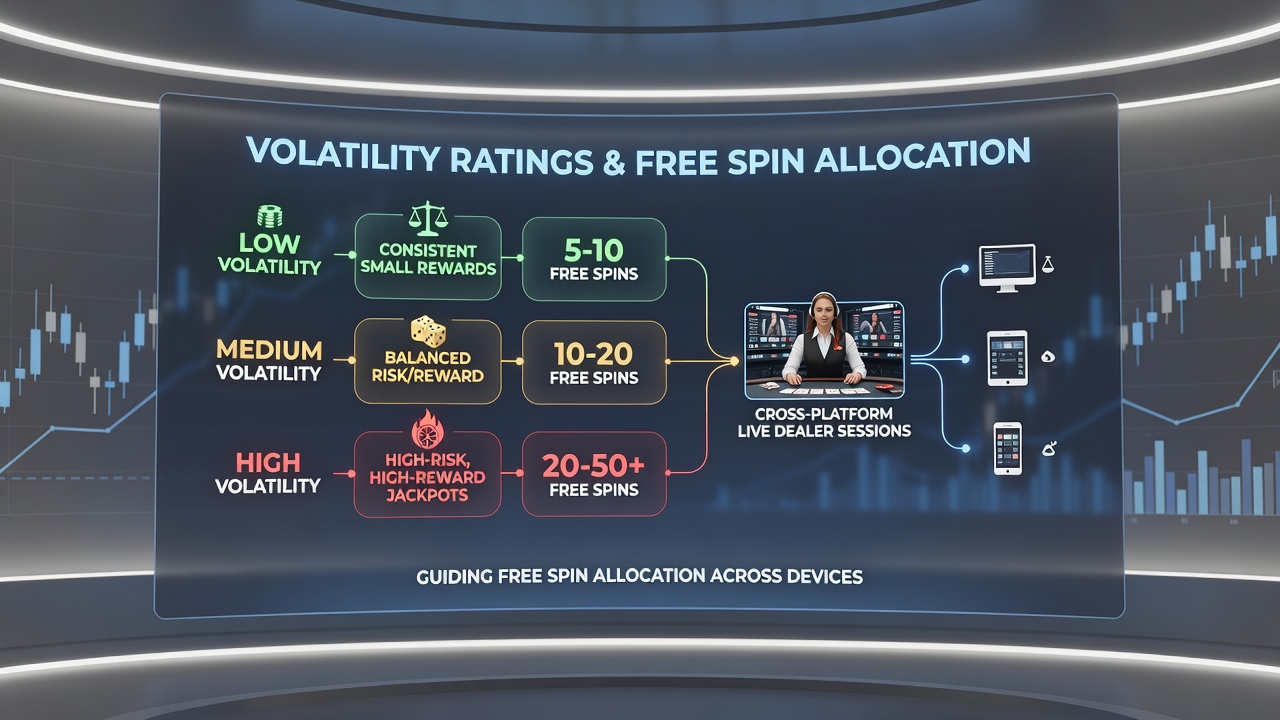
Low-volatility games produce smaller wins at regular intervals, and operators often pair them with modest free spin bundles that encourage extended play without rapid balance depletion, whereas high-volatility titles demand larger or more selective spin grants to offset longer dry spells between significant payouts. Medium-volatility options sit between these poles and receive balanced distributions that reflect both steady engagement patterns and occasional larger rewards. Systems track these distinctions through backend algorithms that pull real-time data from player accounts and device usage logs, then match spin quantities to the volatility profile of the active live dealer title.
Device-Specific Adjustments and Platform Integration
Cross-platform sessions introduce additional layers because mobile interfaces often display condensed information panels while desktop views provide detailed volatility breakdowns, yet allocation engines maintain consistency by referencing the same rating database regardless of access point. Live dealer environments add another dimension since table games such as roulette or blackjack hybrids incorporate slot-style bonus rounds that carry their own volatility scores, and these scores dictate how many free spins transfer from the dealer interface to a player's account. Research from the Malta Gaming Authority indicates that synchronized data feeds between platforms reduce discrepancies in spin availability by up to 18 percent when volatility filters remain active.
Operators monitor session data to refine these filters, and adjustments occur when patterns show that high-volatility live rounds on tablets lead to quicker exits compared with desktop sessions, prompting the system to increase spin quantities on mobile to compensate. The process stays automated in most cases, with human oversight limited to periodic audits that verify rating accuracy against actual payout histories.
Regulatory Frameworks and Reporting Standards
Regulatory bodies require transparent documentation of how volatility influences promotional mechanics, and reports submitted to the Malta Gaming Authority along with data shared through the Australian Gambling Research Centre demonstrate that volatility-based allocation improves compliance tracking by linking each free spin grant to a documented game profile. These records help authorities verify that promotions do not favor one platform over another, and they also support audits that check whether allocations align with stated volatility categories. Figures released in late 2026 reveal that jurisdictions monitoring these metrics observed a 12 percent drop in player complaints related to unexpected payout timing once volatility filters became standard.
Allocation engines further incorporate geographic and temporal variables because player behavior shifts between regions and across peak hours, yet the volatility rating remains the primary anchor point that determines baseline spin counts before these modifiers apply. Live dealer studios supply continuous telemetry that feeds into the same system, allowing real-time recalibration when a particular table round exhibits payout patterns that deviate from its assigned rating.
Implementation Examples Across Major Markets
One North American operator integrated volatility ratings into its live dealer suite during the third quarter of 2026, and the change produced measurable shifts in how free spins moved between desktop and handheld users during blackjack-hybrid sessions. Another platform serving European markets applied similar logic to roulette-based bonus rounds, resulting in spin packages that scaled according to the volatility of the attached slot feature rather than a fixed schedule. Observers note that these adaptations maintain fairness across devices because the underlying rating system stays independent of screen size or connection speed.
Industry reports from the Australian Gambling Research Centre highlight that operators who publish volatility information alongside free spin offers see higher completion rates for cross-platform sessions, since players receive clearer expectations about win frequency before accepting the promotion. The same reports show that October 2026 data sets contained fewer instances of mismatched allocations once platforms standardized their rating inputs.
Conclusion
Volatility ratings function as the central reference point that guides free spin distribution in live dealer environments operating across multiple platforms, and they enable consistent application of promotional rules while satisfying regulatory documentation requirements. Continued refinement of these systems through 2026 and beyond depends on accurate rating maintenance along with reliable data exchange between studios, operators, and device networks.